News
Something to Do
Sep 10, 2016
 “I like life. It’s something to do.” —Ronnie Shakes
Finding something to do has become a problem for many of us.
Almost eight million people had nothing to do in August, and that is only counting the unemployed who were looking for work. One point seven million more had given up looking. Another 6.1 million, involuntarily employed part-time, did not have enough to do.
Perhaps the most telling statistic is this one: 37.2 percent of Americans who might be working (the so-called labor force) are not. No doubt some are the stay-at-home helpmates of CEOs or the offspring of seven-term senators. Still, that figure has been steadily increasing since its low of around 33 percent 20 years ago. (Source for all the above: Bureau of Labor Statistics (.pdf).)
The situation is certain to become worse, and rapidly, owing to several factors. The Big Two are globalization and mechanization. Globalization will continue to move low- and medium-skilled jobs overseas and, increasingly, highly skilled jobs as well. Mechanization of manufacturing and service sector jobs is about to skyrocket, owing to the increasing speed and capacity of computers and the maturation of robotics.
Additionally, merger mania, with its emphasis on downsizing and layoffs; an aging population that stays on the job longer while still receiving retirement benefits that must be paid for through current F.I.C.A. contributions; and substandard health and education infrastructures that are driving down our standing in relation to both our allies and our antagonists are three more stressors on the labor force in addition to the Big Two.
It is arguable that a machine ought to do any job of which it is capable, freeing up the human for higher-level pursuits. That may be true, but between globalization and mechanization, it is all happening too fast, as the labor force participation rate so graphically reveals. And as for programs to retrain the out-of-work, they are few, underfunded, and of questionable value. You may attempt to train a 50-year-old laid-off coal miner to program in Python, but your success rate is not going to be anything to write home about.
On the other end of the work force, our children are not being trained today for tomorrow’s jobs. A K-12 school system in New Hampshire with which I am familiar has no computer science courses, or any plan to offer them. If there is one area of employment in which we may reasonably expect humans will be involved in 50 years it is in configuring, programming, managing, and repairing these beasts that will have by then relieved us of all sorts of work we do today. Not to prepare our children for that will, one day, be looked on as an unforgivable sin of omission.
What are people going to do? What should we be doing to ensure they have meaningful and remunerative work and, even more importantly, are ready to perform it? Probably a great deal more than we are doing now, or even talking about doing now.
I wrote a piece here entitled “Make America Work Again” in May. There I noted that over half of working Americans do not make enough to live on. But at least they are working. Increasing numbers of us are not, however, and our polarized and paralyzed political system holds out little hope for effective action at this time.
If any of us are to continue to have something to do, we must do something. And now.
Make America Work Again: Our Employment Crisis
May 30, 2016

We are in the midst of an employment crisis in this country. Too few people are employed and too many who are earn less—sometimes far less—than enough to live on.
Nearly eight million people were on the unemployment rolls in April. [1] Only 62.7% of Americans of working age are employed or looking for work, the lowest percentage since 1978, [2] and this does not include the nearly 600,000 who have given up looking for work.[3]
Additionally, around three million people who are working earn at or below the minimum wage, which has been $7.25 at the federal level since 2009. [4] Living wage calculators at MIT [5] and the Economic Policy Institute [6] both indicate that $7.25 is less than one-third of a living wage for an adult with one dependent child living in Vermont or New Hampshire. Millions of other workers earn more than the minimum wage but much less than these calculated “living wages.” Almost half of all American workers earn less than the inadequate $15 per hour currently called for by various activists and politicians. [7]
Finally, around six million working people are involuntarily employed part-time and also probably earning well below a living wage. [8]
People need to work, and when they don’t, or when they work for less than a living wage, those of us who do work and earn a living wage are unfairly called upon to pick up the hefty slack, while employers reap the benefits, often, as in the case of the Walmart heirs, becoming multibillionaires in the process.
A recent study by the Center for Labor Research and Education at UC/Berkeley [9] determined that a mere four social welfare programs, the Earned Income Tax Credit, Temporary Assistance to Needy Families, Supplemental Nutrition Assistance Program, and Medicaid cost $152 billion a year between 2009 and 2011. That is almost half a trillion dollars in only three years. Over half that assistance went to working families. And there are dozens of other taxpayer-funded federal, state, and local programs in addition to these.
How long would a business that only paid a third of its electric bill or half the cost of its raw materials remain open, or deserve to? And yet Walmart, only the largest employer to pay their workers less than a living wage, goes on growing year after year. Forbes magazine reported in 2014 that Walmart alone cost taxpayers about $6.2 billion a year in public assistance. [10]
We need to forge a new social contract with ourselves, setting out our rights and responsibilities. The two most important elements on the rights column would be an adequate education and a job that paid a living wage. Every U.S. citizen and legal resident should be guaranteed both. And in the responsibilities column?: Perform your job to the best of your ability and be a good citizen.
Then we can dismantle all these expensive, inefficient, ineffective, and humiliating “safety net” programs and let people enjoy the independence of which we are (almost) all capable. Those few who can’t work could be cared for. Those who can work and won’t, well, good luck to them.
When almost everyone is working and receiving a living wage, almost everyone will be paying into our shared tax pool instead of siphoning funds out of it. Tax revenue up; social “welfare” expenses down; lower taxes for all of us to pay.
Before any “political revolution,” we need a social revolution, one that acknowledges that although we are a liberty-loving, rambunctious, and ingenious people perfectly capable of taking care of ourselves, we are too easily tempted to let someone else take care of us if the opportunity is available.
We would all be much better off if our system encouraged, enabled, and, yes, expected us to exercise our natural independence rather than the contrary.
What individual of any political persuasion could offer a valid argument against such common sense? The left-leaning inclination to expand the safety net and the right-leaning inclination to limit such support to business and the one percenters, are both equally misguided. There is dignity in work, and there is equity when everyone, worker and business alike, pulls their own weight.
Our employment model needs to be based on the unique individualism, love of liberty, and instinct for self-reliance which has always characterized our people. It also needs to stop enabling so many of us—employer and employee alike—to be dependent on the rest of us.
But don’t take my word for it:
“This country will not be a permanently good place for any of us to live in unless we make it a reasonably good place for all of us to live in.”
Theodore Roosevelt, 26th president of the United States (1858-1919)
“It seems to me . . . that no business which depends for existence on paying less than living wages to its workers has any right to continue in this country . . . and by living wages I mean more than a bare subsistence level—I mean the wages of decent living.”
Franklin Delano Roosevelt, 32nd president of the United States (1882-1945)
“The best social program is a good job.”
William Jefferson Clinton, 42nd president of the U.S. (b. 1946)
Sources
[1] http://tinyurl.com/zpu5uv
[2] http://tinyurl.com/zpu5uv
[3] http://tinyurl.com/h37rmuj
[4] http://tinyurl.com/z6e53mp
[5] http://livingwage.mit.edu/
[6] http://www.epi.org/resources/budget/
[7] http://tinyurl.com/h2p7h2n
[8] http://tinyurl.com/zmfhsbk
[9] http://tinyurl.com/kda4v6q
[10] http://tinyurl.com/jjyv7d3
Open Letter to Bernie Sanders
Sep 26, 2015
 Bernie,
I am writing this letter to you on my page because, even though the email I received from you today says, “we need to hear your ideas as to what issues are most important to you ....” there is nowhere on your official campaign website for me to say these things to you.
It is good to see you are fleshing out your platform beyond the one-note income inequality issue with which you launched your campaign. I agree with everything in this email that sets forth your position on many issues, with the following exception:
You say, “We need to raise the minimum wage to a living wage. . .Over a period of a few years the national minimum wage should be $15 per hour.”
You need to go much further than this. For one thing, $15 per hour is not a living wage right now, let alone will it be in a few years. MIT has an excellent Living Wage Calculator which I believe originated at Penn State. It indicates that a living wage for an adult with one child in our state of Vermont is already $22.04 per hour. Now of course what constitutes a living wage must of necessity be a matter for careful study and computation. The Economic Policy Institute, for example, estimates a living wage for the same adult with one child living in Vermont at $25.71 per hour.
I hate to say this to you, Bernie, because I believe you are sincere in your campaign. However, anyone arguing for less than a living wage TODAY is playing into the hands of the corporatocracy, not to say colluding with them, to maintain a high level of poverty in this country.
I have taken the pledge not to vote for any candidate who does not support my personal platform: A guaranteed job at a living wage for any adult 18-65 who wants one. Then dismantle the huge, expensive, humiliating, and ineffective social “safety net” of alphabet programs that simply sustain dependency among a population perfectly capable of independence.
The second essential plank of my platform is real education reform. The waste of brain power in this country (and throughout our world) is a disgrace. Real reform is going to be expensive and disruptive. However, it needs to be pursued with a single-minded purpose: That ALL our children will be provided with a quality education, whatever it takes, whatever it takes, whatever it takes.
So good luck, Bernie. I don’t expect to be voting for you or anyone else in 2016, unless a candidate comes along who is truly willing to speak truth to a populace exhausted by the wretched governance that has been foisted on us since the Reagan administration. We are in a downward spiral in this country, and a $15 minimum wage in a few years is not going to slow that descent one little bit.
Death by a Thousand Cuts
Mar 10, 2011
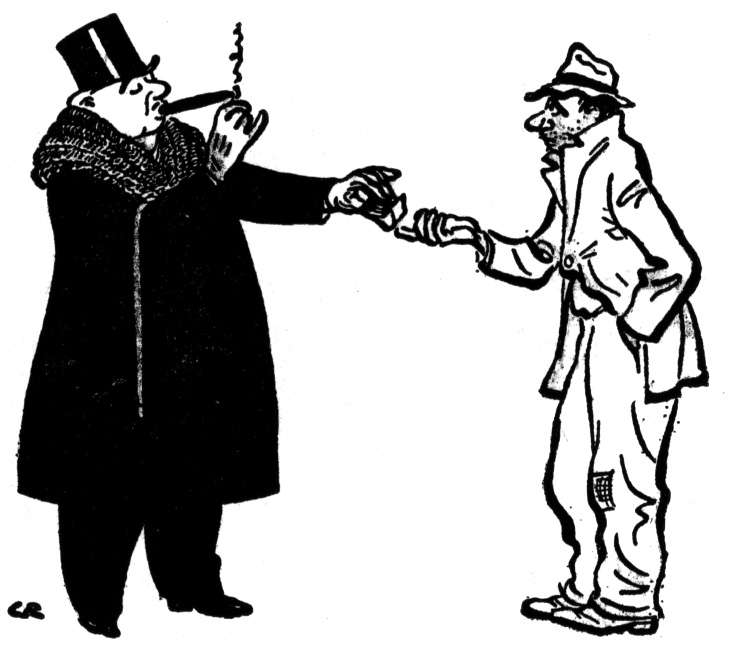 The anti-labor activities in Ohio and Wisconsin in recent days are the tip of the iceberg—the tip that the mainstream media has seen fit to cover. Here are some dramatic numbers which are a harbinger of perilous times to come:1
- Twenty-three percent of the jobs lost during the recession were low-wage jobs, while 49 percent of the jobs gained in the last “recovery” year were.
- Forty percent of the jobs lost in the recession were high-wage jobs; and an even less favorable number gained in the last year were—only 14 percent.
- One in five who are working part time want full-time work.
- Six percent of the significant productivity gains seen in the last 18 months were shared with workers. In past recoveries, that figure has averaged 58 percent.
But then, what is a union today? The Transportation Security Administration workers (the ones who pat you down at airports) recently gained the right to vote for union representation and will be doing so through April 19. The union representation they are voting for, however, will not allow them to strike, engage in slowdown activities, or bargain for wages.3 This is a union?
This is death by a thousand cuts. The radical right—I would not grace them with the name of Republicans and besmirch the party of Lincoln, TR, Eisenhower, and even the felon Nixon, who had more decency than they have—the radical right are on the ascendant everywhere, including the White House.
And we put them there. The fault lies squarely with the American electorate, with you and me.
And that is the source from which our redemption will come. We, the people, will reclaim our nation’s pre-eminent place among history’s grandest experiments, or, along with the glory that was Greece and the grandeur that was Rome, we will fade into the back pages of history. Knowing the world as I know it today, I don’t want it to be denied America’s example, the America I know we have in us, the America I have lived, and hope to live again.4
____________________
1 Jobs returning—but good ones not so much, by Zachary Roth, from Yahoo! News, Mar 9, 2011.
2 Union Membership in U.S. Fell to a 70-Year Low Last Year, by Steven Greenhouse, from the NYTimes, Jan 21, 2011.
3 Screeners Under Obama May Give Federal Unions Biggest Vote Win in Years, by John Hughes, from Bloomberg.com, Mar 9, 2011.
4 Are America’s Best Days Behind Us?, by Fareed Zakaria, from Time Magazine, Mar 3, 2011.
The Business of America Is Work
Dec 18, 2010
People have to work. They have to work for their bread. They have to work for their self-esteem. They have to work in order to take their place in a society which requires their portion of labor and which is only able to underwrite their idleness to a limited extent before it begins to crack apart.
One in every four American workers is not working now—at all or enough or at a sufficient wage to qualify them as adequately employed. They are threatening to become a permanent underclass of un- and underemployed Americans. The middle class who are employed are losing ground, losing hours, losing wages, forced by globalization to drift ever nearer to the status of the third-world neo-slave labor force that is inundating our globe with cheap goods and environmental degradation.
If we are to avoid social cataclysm, work must become the top priority in America. And the only way to do that is to guarantee every American worker a job at a living wage.
The recent tax cut legislation passed by Congress is another poison pill dropped into the social brew. That brew has been poisoned for thirty years by the nonsense of trickle-down economics, as enormous fortunes have been made by brigands with whom the robber barons of the 19th century would have been ashamed to associate. The legislation will have little or no effect on employment, which can only be bettered by finding our way back to a vibrant, productive economy. If we have to jump start that economy by governmental intervention to put people—all people—back to work, then so be it.
The fact that we should never have allowed ourselves to reach the point where such action is required is beside the point. We are there. Americans in vast numbers are losing their homes, their jobs, and their savings, and with home, job, and savings go their self-esteem and their connectedness to community. As we enter the third year of economic bust in America, huge numbers of the unemployed will begin to exhaust their 99 weeks of unemployment compensation. Cold and hunger will then visit America to an extent not felt since the first half of the 19th century. Few who feel this cold and hunger will be unjustified in believing their social contract has been broken, and we may look for a rapid decline in social order, a ramping up of police state repression, and a swift decline into third world status ourselves.
This need not be, howsoever present policies seem to be condemning us to this fate. We, the people, remain the masters of our fate. And while that is still so, we must act, with speed, decisiveness, and a spirit of cooperation not seen since the founding fathers came together from disparate political spheres to establish this grand experiment in the first place.
A Living Wage, Part 2
Sep 06, 2010
 It is immoral to take an adult’s full-time labor and pay that adult less than a living wage. It is immoral, and it should be illegal.
Given that premise, what should we do? In our previous post on this issue, we noted that the Living Wage Calculator at Pennsylvania State University1 provides a living wage (LW) for a variety of households throughout the 50 states and D.C. What a single-person household requires for an LW is obviously going to be less than a household containing two adults and two children. Furthermore, a four-person family living in rural Vermont is going to require a lower LW ($25.38 in my county) than one living in midtown Manhattan ($30.30).
Geographic variation may be taken into account in establishing an LW without fearing everyone will move to regions where a higher one is available. There are simply too many other factors involved. However, to set an LW on the basis of household size is to risk both employers and employees attemping to “game the system” to their advantage. Just as the current federal minimum wage ($7.25 per hour) is a one-size-fits-all figure, so should the estabishment of an LW. The question is, what level do we set it at? My recommendation is to set it at the level provided by the Living Wage Calculator for a household with one adult and one child.
This is something of a compromise. I grew up in the classic American family, where one breadwinner supported himself, a spouse, and two children. The average family size still hovers around that figure. From a social policy perspective, we can argue that the LW should encourage this size of a family unit. Practically speaking, however, we can never hope to raise the minimum wage from $7.25 to over $25 per hour, at least until we can demonstrate the feasibility—and desirability—of a significant, if lesser, increase.
In the real world today, most intact households contain two working adults. If we set the minimum wage at a level sufficent to support one adult and one child, we may have a reachable goal which is still a desirable one from a social policy perspective. In my rural Vermont setting, this means raising the federal minimum wage from $7.25 per hour to $15.47. As the people at Pennsylvania State University say, this figure supports “a minimum estimate of the cost of living for low wage families.” No frills here. No European vacations, and little left over for college or retirement nest eggs. This is still bare bones living and still it is over twice what we require employers to pay their full-time workers today. And if that is not a national disgrace on par with waging endless war for the sole purpose of enriching a handful of multibillionaires, I don’t know what is.
The very idea, of course, will set up a great wailing and gnashing of teeth. It will be attacked as the last socialist nail in the coffin of American freedom and capitalism. It will be hooted down as pie in the sky. However, others, more thoughtful and aware of the extent of the peril we face if we maintain the status quo, will begin to take up this cause (and you will hear about them in this column).
Now it is time to turn our attention to the other great change we must bring about—guaranteed employment for all. And with that new civil right will come new civil responsibilities. More about that in our next posting.
____________________
1 Living Wage Calculator, from Pennsylvania State University, accessed September 6, 2010.
Ending the Great Recession
Sep 04, 2010
 Another respected voice has been raised in opposition to the growing income inequality in our country.1 On the eve of another disappointing jobs report, when the official unemployment rate rose another tenth of a percent (to 9.6), former Secretary of Labor Robert Reich warns that “None of the standard [economic] booster rockets are working,” not low interest rates, cheap money, the stimulus, or tax credits for new hires.
The real problem, says Reich, is “the structure of the economy.” Consumers have run out of buying power, having seen flat wage increases since the exalted Reagan Revolution: “The median male worker earns less today, adjusted for inflation, than he did 30 years ago.” They can only make a car, a handbag, a basket of apples, so cheap, and you will still not be in a position to buy them if you are earning at a 1980 level, you have maxed out your charge cards, and your house, which you borrowed on during the years they convinced you its value would never decrease, is now underwater.
Meanwhile, no power on earth seems capable of slowing the transfer of wealth in the U.S. from the poor and middle class to the super-rich top one percent, who have gone from earning 9 percent of the nation’s total income in the late 1970s to 23.5 percent in 2007. Yes, that is one percent of the population earning nearly a quarter of all national income.
Reich takes his lesson from the Great Depression and its aftermath: “[T]here is only one way back to full recovery: through more widely shared prosperity.” In other words, through a redistribution of wealth, the sort of thing made possible in the 30s and 40s by the New Deal programs, a healthy labor movement, the G.I. Bill, and social legislation that attacked inequities in civil and voting rights. However, most of these and other such programs are still in place, and yet our wealth continues to flow up to the very few, abetted by a bought-and-paid-for political establishment.
The problem with Reich is that his recipes for relief seem paltry and all-too-easily belittled, besieged, and dismissed in the present political climate: Increasing the income tax credit, raising the ceiling on Social Security contributions, extending educational opportunities at both ends of the school career, compensating the underemployed with something he calls “earnings insurance.”
Like the stimulus and other measures floated to little or no effect so far, these ideas seem doomed to failure. In my view, we need a recall to democracy, where all for one and one for all is recognized as the only way for all to thrive.
A two-plank platform can get us there: 1) Guaranteed employment at 2) a living wage. Next time, I will get back to what I think that living wage should be.
See also two enlightened columns2,3 from yesterday’s Huffington Post.
____________________
1 How to End the Great Recession, by Robert Reich, from the NY Times, September 2, 2010, accessed September 3, 2010.
2 Neo-Progressives, by Lawrence Lessig, from the Huffington Post, September 3, 2010, accessed September 4, 2010.
3 Why the Big Lie about the Job Crisis?, by Les Leopold, from the Huffington Post, September 3, 2010, accessed September 4, 2010.
A Living Wage, Part 1
Aug 28, 2010
So what is a living wage (LW)? I am happy to let anyone establish that figure, if they are willing to live on it for the next two years. Hands? Well, all right, we will have to arrive at an LW by a different path.
Pennsylvania State University has developed a Living Wage Calculator1 which is probably as good a place to start as any. They provide living wages for a single adult, an adult with one dependent, two adults, two adults with one dependent, and two adults with two dependents. In a drastically overpopulated world, I would argue that we need not go beyond these numbers in our guaranteed LW. If you want to burden the world with six children, you had better be prepared to pay the price.
In my neck of the woods (Windsor County, Vermont), the LW for a single adult is $8.38, $1.13 more than the federal minimum wage and $.32 more than Vermont’s more generous minimum wage. An LW for an adult supporting a spouse and two children is $25.38 per hour, $18.13 more than the federal minimum wage and $17.70 more than Vermont’s minimum. At that level, the difference in the shortfall between the two is negligible.
Which brings us to our first practical problem. What is to keep employers from favoring hiring single adults without children if we establish these living wages based on marital and dependent status? What employer would not rather spend $8.38 than $25.38 per hour on an employee? And from the other point of view, would not the prospect of a significantly higher wage motivate many to have children who would otherwise not want them and who, consequently, probably shouldn’t have them?
I will propose one solution to this conundrum in my next posting. Follow me on Twitter to find out when that will be.
____________________
1 Living Wage Calculator, from Pennsylvania State University, accessed Aug 28, 2010.
A Modest Proposal
Aug 22, 2010
 Among thoughtful observers, a consensus seems to be forming regarding the only way out of the nasty mess(es) we are in, and that consensus is jobs. We need to put people back to work, and fast. Read the essays by Bob Herbert and Bob Burnett linked on this month’s Noted with Interest for starters, then search "jobs" in Google News for the past 24 hours and read many more.
Employment, in my view, should be a right, embodied in a constitutional amendment, along with the other rights we hold so dear.
The right of all adults to have a job and to be free from the vicissitudes of unemployment can and should be realized in this country, though to do so will require a sea change in our attitudes and a huge shift in priorities, away from a government of, by, and for corporations and back to a government of, by, and for the people—that is, back to a democracy instead of the corporatocracy which now controls our nation, our state and federal governments, and you and me.
We are a rich nation only at the very top of income levels. Otherwise, we are a poor country that is getting poorer under the thumb of the corporatocracy. Over thirteen percent of Americans—39.8 million of us—lived in poverty in 2008 and that number has gone up since then.1 This includes nearly one in five children, the highest rate of childhood poverty—by far—in the industrialized world.2
An essential step before guaranteeing employment for every American adult is to ensure that those jobs will pay a living wage.3 The federal minimum wage, forty years ago, was not even close to a living wage and today it is significantly further from one. It is past time to acknowledge that it is immoral to accept an adult worker’s full-time labor and pay that worker less than a living wage. It is immoral, and it ought to be illegal. So this is step one on the road to full employment—every job in America must pay a living wage.
In my next post, I consider what should be included in computing a living wage. Meanwhile, click on footnote #3 to find out what a living wage is in your state (according to one university’s calculations), and footnote #4 to find out your state’s current minimum wage.4 The federal minimum wage, below which states are not allowed to fall, is $7.25 per hour.
____________________
1 U.S. Census Bureau, accessed Aug 22, 2010.
2 Safety nets for children are weakest in US, from UNICEF, accessed Aug 22, 2010.
3 Living Wage Calculator, from Pennsylvania State University, accessed Aug 22, 2010.
4 List of U.S. minimum wages, from Wikipedia, accessed Aug 22, 2010.
The Way We Live Today
Feb 27, 2010
 Update (Feb 27, 2010): As reported in the Pakistan Daily Times,2 a number of lawyers have allegedly threatened to “burn alive” any lawyer who would dare to defend the family of Shazia Masih. Leaving for the moment why the family should need defending more than the man in whose custody Shazia died, the article points up the hypocrisy emanating from a body which only recently gained worldwide admiration for their brave stand for justice.
Originally published Feb 6, 2010.
She is about 6 in the picture here. She was 12 when she died, probably of a combination of a skin disease, torture, and poverty. She was earning $8 a month—minus the employment agency’s commission—working 12 hours a day cleaning floors, cars, and toilets for a fatcat lawyer, to help her family pay off its debts. Her employer claimed that her 17 injuries “caused by blunt means” were the result of a fall down stairs. The case is pending.
This is how we live today, and if the world can’t manage a massive attitude adjustment, things are going to get worse and worse. Pakistan may “seethe”1 all it wants at the death of Shazia Masih, but Pakistan killed that little girl as surely as if her execution had been inscribed in its nation’s statutes.
All over the world, nations are abusing and exploiting and terrorizing their own. The U.S. not only does it at home, but exports their terror to the entire globe. A small global contingent of fabulously wealthy individuals have co-opted their body politic, and are destroying the golden goose in a headlong dash for more and ever more lucre.
That this world was made for all; that each life is precious and must be nurtured and given every opportunity to make its unique contribution to the future; that poverty, want, and ignorance are eradicable; that vast inequities in income breed violence on a scale the world can no longer afford to contemplate; these are attitudes which the world must adopt or we are doomed.
How far we are from adopting these attitudes is starkly clear in the Times story, the horror of which is repeated millions of times over across the world every day.
____________________
1 Bruised Maid Dies at 12, and Pakistan Seethes, by Sabrina Tavernise, from the New York Times, Feb 5, 2010, accessed Feb 6, 2010.
2 View: Reassessing the lawyers’s movement, by Ayesha Ijaz Khan, Feb 26, 2010, accessed Feb 26, 2010.
The Employee Free Choice Act
Mar 16, 2009
 We were of two minds about the Employee Free Choice Act (EFCA), until we read the report on it from the Congressional Research Service.1 As always with the CRS, the report was succinct, clear, comprehensive, and nonpartisan. It provides Congress with a good understanding of complex legislation. After reading it, we are of one mind about the EFCA.
Unions are an endangered species in our society (see our Dec 26, 2008, item, We Can Do It!). The EFCA liberalizes the procedures involved in organizing workers into unions.
Currently, 30 percent of a body of workers need to present a petition stating their desire to organize. The National Labor Relations Board (“the Board”) then calls for an election by secret ballot among all the workers in that body. The median period from petition to election in FY2008 was 38 days, and 95.1 percent of elections were held within 56 days (8 weeks). If most of the workers vote for union representation, the union is formed and the procedure passes on to the initial collective bargaining. In 32 percent of these cases the parties fail to reach agreement within the first two years following an election.
The EFCA would require the Board to certify an individual or labor organization as the exclusive representative of a bargaining unit without an election if a majority of the affected workers indicated their desire to unionize by signing a card. It would also allow binding arbitration to determine the initial contract between the parties should they not be able to come to an agreement in a reasonable amount of time. Finally, the EFCA would impose new and stiffer penalties for unfair labor practices by employers.
Proponents of the EFCA argue that by eliminating the long period between the petition and the election, employers will not be able to lobby against the election by means which they allege are unfair, coercive, and punitive. Opponents offer a good deal of cant regarding the perversion of the democratic process in eliminating secret ballot elections, but essentially they are bewailing the same thing the labor organizers are applauding: the end of that gap in time between petition and election. A better argument they offer (and sometimes even with a straight face) is that the new method exposes workers to the same intimidation tactics organizers accuse employers of using.
We feel, however, that if the law already requires 30 percent of the workers to petition publicly in favor of unionizing, then there is little additional harm in declaring a union in force once 51 percent do the same thing. It is not the best of all possible solutions. That would be one where all workers could decide for themselves, without pressure from employers or organizers. We don’t live in a perfect world however, and this solution does restore some balance between the parties seeking to support and to suppress unionization. The latter have had it their own way for some time, as the precipitous decline in union membership indicates. And that decline has played not a small part in the vast inequities in wealth we have seen develop in the U.S. over the past 30 years.
It is time to claim our fair piece of the pie. And we can only do that if we do it all together.
____________________
1 The Employee Free Choice Act, by Jon O. Shimabukuro, from the Congressional Research Service via OpenCRS, Jan 26, 2009, accessed Mar 9, 2009
Wage Slaves
Jan 29, 2009
 “Slow or negative economic growth, combined with highly volatile prices, will erode the real wages of many workers, particularly the low-wage and poorer households. In many countries, the middle classes will also be seriously affected.” So concludes the International Labour Organization, the U.N. body that “is devoted to advancing opportunities for women and men to obtain decent and productive work in conditions of freedom, equity, security and human dignity.”
Their first Global Wage Report 2008/09, Executive Summary (.pdf, 4 pp., 63Kb) paints a bleak world picture for us wage slaves, and one which we would do well to anticipate and struggle against by lobbying our governments to establish living minimum wages and to secure and extend our rights to collective bargaining. Among the report’s conclusions and recommendations:
- 2009 wages will decline by .5 percent in industrial countries.
- Levels of minimum wage should be increased wherever possible.
- Between 2001 and 2007, real wages grew close to 0 percent in the U.S.
- Wage growth has trailed GDP growth and is continuing to decline (i.e., the profits are going elsewhere).
- Wage inequality (the difference between the highest and lowest wages) is growing most rapidly in the U.S., Germany, and Poland.
- In most countries, women’s wages still amount to only 70 to 90 percent of men’s and the gap is closing very slowly, if at all.
Revisiting Public-Private Partnerships
Dec 30, 2008
 We have written about public-private partnerships (PPPs or P3) before (see Water, Incorporated, Interstate, Inc., and Public-Private Partnerships). In the coming collapse, government on all levels will be sorely tempted to turn over public assets to private business in exchange for a fat check up front. In most cases, they will be making a serious mistake.
No state is more likely to succumb to the fat check temptation than California, and it is good to see that Los Angeles at least is aware of some of the pitfalls and is proceeding with something akin to responsible conduct. The Office of the City Controller has funded a study by The PFM Group entitled Special Study to Assess Opportunities to Develop Public-Private Partnerships (.pdf, 96 pp., 888Kb).
The study takes a stab at covering all the bases that need to be considered by a municipality when it is contemplating turning over to private enterprise an asset or service heretofore provided by the public sector. It has a clear bias toward favoring PPPs. This document is nonetheless important for anyone to read who may become involved in the near future with the questions it addresses, and that probably includes most of us who try to keep an eye on what our town, state, and federal government are up to in advancing PPPs.
A section entitled “Addressing Misconceptions Regarding P3s” includes the following:
“PPPs negatively impact labor. ... The concern of many labor representatives is that a P3 concession will result in lost jobs, lower wages, reduced benefits, and loss of job security. However, in many P3 arrangements, contracts have been structured such that all previous government employees are assured a job position with the same level of salary and benefits.”1 Then later, when the paper provides a case study of an existing contract for custodial services that saved L.A. County a lot of money, “the commission concluded that the savings from contracting was attributable to reduced labor costs, as contractors pay lower wages and sometimes employ fewer workers.”2
Exactly. Too often PPPs are merely ill-disguised attempts to, once again, deprive the working man and woman of a decent salary in order to put more dollars into the pockets of the bosses. In 2007, 39.8 percent of public sector workers enjoyed union membership coverage, while only 8.2 percent of private nonagricultural workers were covered.3
We are in a race to the bottom in this country, with a war on unions and an unrestricted globalization that is exporting good-paying jobs as well as doing an end run around decades of struggle for labor and environmental protections.
And let us not forget: We privatize our health care in this country, and it costs us twice what other industrialized countries pay while delivering an inferior product. Federally managed Medicare and Medicaid, on the other hand, are delivered with much greater efficiency and less cost than the health care most of the rest of us receive. Let that be a lesson to us.
Also Noted: See the Rand report, A Call to Revitalize the Engines of Government (.pdf, 28 pp., .2Mb), by Bernard D. Rostker. This call for a return to common sense concludes, “The new administration should not try to fool the American people, perpetuating the myth of smaller government by not counting the hordes of service contractors its engages. Clearly, there are things that should be contracted and that the government need not and should not undertake, but the unfettered use of contractors has skyrocketed and must be brought under control.”
____________________
1 Special Study to Assess Opportunities to Develop Public-Private Partnerships, pg. 11, accessed December 27, 2008 (as were other footnoted items in this posting)
2 Op. cit., pg. 35
3 Index of Tables: Union Membership and Coverage, from Georgia State University
We Can Do It!
Dec 26, 2008
 Are unions dead in this country? Are over a hundred years of courageous labor struggles—struggles the working men and women had to wage against their own government as much as against their bosses—now history, only history?
Thirty-five years ago, a quarter of all nonagricultural workers in the private sector were unionized; in 2007, that number was down to 7.5 percent. In private manufacturing, the picture is worse, going from 39 percent unionized workers in 1973 to just over 11 percent today.1
Meanwhile, when the auto industry collapses, it’s the greedy workers’ fault. Cut their pay, cut their benefits, whittle them down as close to nothing as we can. Is education in trouble in this country? Then it’s the greedy teachers’ fault. Bust their selfish union, destroy public education in the only country that attained greatness through that institution.
Bob Herbert wrote in his column this week, “The economic downturn, however severe, should not be used as an excuse to send American workers on a race to the bottom, where previously middle-class occupations take a sweatshop’s approach to pay and benefits.“2
Yet that is exactly what is happening, as is explicated in Naomi Klein’s The Shock Doctrine: The Rise of Disaster Capitalism.3 Whether they use the worst days of the Iraq war to hand over Iraq’s oil reserves to Shell and BP; take advantage of the Southeast Asian tsunami to auction off the beaches to tourist resorts; or “capitalize” on the tragedy of Katrina to destroy public housing and public education in New Orleans, the corporatocracy that controls this nation uses every disaster to further line its pockets at the expense of the population.
The current fiscal crisis is the biggest disaster of them all, and everywhere we look, we see the corporatocracy taking advantage of it, from the massive giveaways to the banking executives, to the pressures on working and middle-class Americans to take less and less of a piece of the pie that they have fought for and earned over and over. Have we made concessions until we are blue in the face? New hires at the Big Three are now paid slightly over $14 an hour.
Is there a silver lining? The tiniest one imaginable. The only year between 1973 and 2007 when union membership increased rather than fell was 2007, when it went up one tenth of one percent.
The ball is in our court. The vote is in our hands. This country can devote itself to the well-being of the greatest number, rather than the fewest. It can be done. It must be done. We can do it.
____________________
1 Index of Tables: Union Membership and Coverage, from Georgia State University, accessed December 23, 2008, as are the other sites in these footnotes.
2 A Race to the Bottom, by Bob Herbert, from the New York Times, December 22, 2008
3 The Shock Doctrine, from Amazon.com
Skewed Priorities
Dec 16, 2008
 The first ripples are spreading from the center of the financial debacle.
It looks like the White House will have to do an end run around its own party to bail out the auto industry,1 in hopes of saving three million jobs.2 Senate republicans have blocked a Congressional plan to provide a few billion in loans to the industry,3 a plan that even included turning the industry on its head and handing over future business decisions to a “Car Czar” to be appointed by Bush. The Republicans in the Senate wouldn’t buy it without enormous concesssions in pay and benefits from the unions, which have already done more than their part to sustain their industry.
And where is the justice or equity in seven hundred billion taxpayer dollars hastily handed over unconditionally to Wall Street following its shameful despoliation of world finance, and not one dime to bolster an admittedly flawed industry, but one upon which depends a significant percentage of working Americans?
And then there is Republic Windows and Doors.4 When Bank of America pulled the plug on the Chicago company’s line of credit, the owners told the unionized workers the 40-year-old company would close its doors in three days and, gosh, they didn’t think they had the money for the 60-day severance or accrued vacation pay the law required them to provide the workers. So the workers staged a six-day sit-in at the factory. Three-way negotiations among the union, the company, and the banks resulted in the offer of loans sufficient for the company to pay its obligations to the workers. Whether they will or not, however, since the company filed for bankruptcy on December 12, may still be in doubt. Workers are scandalously far from the front of the line of creditors in bankruptcy proceedings. Meanwhile, Republic has renamed itself Echo, moved to Iowa, and opened its factory with nonunion labor.
That the Republic workers’ sit-in to obtain rights assured them by law should be described in the Times as “risky,” “militant,” and “potentially dangerous,” speaks volumes to the skewed priorities that result in a system where capitalism is the master and not the servant of the people.
We need to get money into the pockets of regular Americans, not continue to pick those pockets for the benefit of the superwealthy. Everyone knows this, but as of last weekend, no one in Washington had done anything about it.
____________________
1 White House Ready to Aid Auto Industry, by Stephen Labaton and David M. Herszenhorn, from the New York Times, December 12, 2008 (accessed December 13, 2008)
2 Over 3 million jobs would disappear if U.S. auto-makers go bankrupt, from Economic Policy Institute, December 3, 2008 (accessed December 11, 2008)
3 Senate Abandons Automaker Bailout Bid, by David M. Herszenhorn and David E. Sanger, from the New York Times, December 11, 2008 (accessed December 13, 2008)
4 Even Workers Surprised by Success of Factory Sit-In, by Michael Luo and Karen Ann Cullotta, from the New York Times, December 12, 2008 (accessed December 13, 2008)
Poor No More; No More Poor!
Nov 19, 2008
 We’re sorry, but we’re going to keep harping on poor people until we get rid of them.
Poor people cost us money. When they get sick, they jack up our health insurance premiums with their uninsured visits to emergency rooms; when desperation drives them to crime, they fill our overfull prisons; they are responsible for scores of expensive local, state, and federal safety-net-type programs, from food stamps to SCHIP to WIC to you-name-it; and too many of them vote Republican which, as we know, costs us all real money.
A short report from the Working Poor Families Project entitled Still Working Hard, Still Falling Short explodes many of the myths surrounding working poor families, and reports how their numbers have skyrocketed during a period of solid economic growth.
A low-income working family (LIWF) is defined as a married-couple or single-parent family with at least one child under the age of 18 earning less than 200 percent of the poverty income threshold as defined by the U.S. Census Bureau. In 2006, that was $41,228 for a family of four. It is worthwhile to remember that the poverty income threshold is higher than a full-time job earns at the federal minimum wage, never mind 200 percent of that threshold. And 22 percent of all jobs, more than one in five, pay less than the poverty income threshold.
- The number of LIWFs increased by 350,000 between 2002 and 2006.
- During that period, the economy added 4.7 million jobs paying at the poverty-threshold level.
- Almost half of all jobs require more than a high school education, and 88 million adult workers are not ready for these positions.
- Myth: LIWFs are slackers. Truth: The average annual work effort of LIWFs is the equivalent of 1.25 full-time jobs.
- Myth: LIWFs are headed by single parents. Truth: 52 percent of LIWFs are headed by married couples.
- Myth: LIWFs are headed by immigrants. Truth: 69 percent of LIWFs have only American-born parents.
- As a Vermonter, we are proud to see that Vermont ranks number 1 in income equality between the top and bottom income quintiles.
And once we have money in American pockets and at least a high school diploma on every wall, the Republicans will have to stop relying on the ignorant poor to win elections; return to the core values of the party of Lincoln, T.R., and Eisenhower; and perhaps reclaim a degree of respect within the framework of American politics.
Double Up and Win
Nov 15, 2008
 Do the math.
$6.55 x 40 hours x 52 weeks = $13,624.
If Obama wants to stimulate the economy, he can do a far better job of it than by sending middle class Americans another rebate check, lowering their taxes, raising taxes on the rich, freezing mortgage foreclosures, paying businesses $3,000 for every new domestic hire, or bailing out General Motors. These are all ideas that have been floated recently and it is not to say that some of them aren’t excellent ideas that should be implemented on January 21, if possible (others aren’t and shouldn’t). However, we have an even better idea. On top of immediately infusing a big percentage of the work force with some disposable income, our idea will right a long-standing wrong and eliminate working class poverty in America overnight:
Double the federal minimum wage.
It is immoral to pay a full-time worker less than a living wage. This is the meaning of 1 Timothy 5:18: “For the Scripture says, ... ‘The laborer is worthy of his wages.’”1
For additional statistics regarding the minimum wage, poverty thresholds, and a living wage, click the Poverty or Economics tags in the left-hand column.
We can fiddle with the obscene wealth of the top one percent and fuss with bailouts and middle class tax cuts until the cows come home. But if we want to take a giant step toward redistributing wealth appropriately in this country, we should start by respecting the value of our labor. It matters not whether you flip burgers, clean toilets, or manage a hedge fund. Full-time labor is worthy of a living wage, and the 25 percent of the population currently earning less than that—yes, one out of every four workers!—should demand it, and those of us earning more should stand in solidarity with them.
Anything less in the richest country in the world is bad politics, bad governance, and just plain wrong.
____________________
1 Parallel Translations, at Biblos.com, quoting the New American Standard Bible. See also Matthew 10:10 and Luke 10:7.
What Matters?
Oct 16, 2008
 A wise fellow once said, “Life is half over before we know what it is.” Unless we live to be 126, our life is probably something more than half over, and past time for a moment’s reflection. In our view, life’s essential question is, “What matters?” It is a question one can only answer for oneself.
So what matters for us? We would say:
- Freedom to do as we please, and four healthy limbs and the education to enable us to do it.
- Engaging and challenging work that we can drop for something else when it ceases to be one or the other.
- Love: The incomparable miracle.
- The capacity to enjoy a New England autumn, a good book, a good meal, a pretty melody, a pretty picture.
- The understanding that the quality of our life is dependent on the quality of all other life on the planet, and the energy and the perseverance to inhabit that understanding with action.
- The urge to delight, and the capacity to be delighted.
Solidarity Now!
Aug 07, 2008
 Nothing says “All Together Now” like workers banding together to collectively bargain for better working conditions. The U.S. has over a hundred years’ proud history of workers struggling to win unionized representation. Still, the percentage of unionized workers in the private sector has plummeted from over 16 percent in 1983 to under eight percent today. The fact that wealth has become increasingly—obscenely— concentrated in the hands of the few over that same quarter century is no coincidence.
The nation’s largest private employer, Wal-Mart, whose family ownership contains some of the richest people in the world, has worked hard to keep unions out. With a Democratic victory threatened in November, Wal-Mart is particularly frightened of the Employee Free Choice Act (House version is H.R. 800,; Senate version is S. 1041). This bill, which has passed in the House and is now under consideration in the Senate, restores some of the balance of power to workers in their struggle to form unions. That balance has been heavily shifted to management during the past several administrations. Wal-Mart has recently begun ramping up their opposition to this bill, with a campaign to intimidate their workers.
Wal-Mart Watch, an organization “working to make Wal-Mart a better employer, neighbor, and corporate citizen,” is trumpeting a recent page one article in the online Wall Street Journal, about Wal-Mart’s activities, and organizing a petition to tell Wal-Mart to stop intimidating its workers. You can read the WSJ article and sign the petition at the URL below.
The Workman Is Worthy of His Hire
Aug 05, 2008
One-third of American families with children are classified as low income because they earn less than twice the federal poverty level. As they add hours and/or family members to the work force, they quickly cease to qualify for various modes of assistance available to them, rendering the additional income far less valuable than that obtained by their initial efforts.
A pair of new reports from the “nonpartisan” Urban Institute entitled, “Making Work Pay Enough,” and “A New Safety Net for Low-Income Families” propose a number of policy tweaks that federal and state governments can make to those assistance programs to remove the disincentives to self-improvement for these families. (The first report is available at the link below; the second is available here.)
Meanwhile, the second of three increases in the minimum wage—arguably the only accomplishment of the 110th Congress, and a shamefully meager and mean-spirited one at that—kicked in last month. The first increase, in 2007, took the wage from $5.15 an hour to $5.85; last month’s to $6.55, and next year’s final increase will send it soaring to $7.25. As has been the case since 1997, one full-time worker in a minimum-wage family will continue to make about half the federal poverty level.1
I take the biblical adage, “The workman is worthy of his hire” to mean that if you are going to take advantage of someone’s full-time labor, you owe them a living wage. All the policy tweaks in the world won’t bring about the justice this situation calls for. The American worker and the American people need to wake up. CEO’s are making more than 500 times what their average worker is making,2 and the middle class has seen a net loss in income during the present administration.3
This government was founded on principles of equity, in opposition to the accumulation of wealth in a few hands. The first step to restoring our nation’s economic health should be to raise the minimum wage to a living wage (which will vary from state to state), and keep it there by indexing it to a real annual cost-of-living increase, and not to the cruel fiction of the Consumer Price Index.4
____________________
1Oregon State University (Accessed July 30, 2008)
2Wages in America: The Rich Get Richer and the Rest Get Less, from The War at Home: The Corporate Offensive in America From Reagan to Bush, by Jack Rasmus (Accessed July 30, 2008)
32005 Incomes, on Average, Still Below 2000 Peak, David Cay Johnston, citing IRS data, in the New York Times, August 21, 2008 (Accessed July 30, 2008)
4“Using the Consumer Price Index to Rob Americans Blind,” by Richard Benson, at SafeHaven.com (Access July 30, 2008)
Copyright © 2008 All Together Now.